Wednesday, 27 January 2016

Novel written with a brush

Can a novel be written with a paint brush. Pick up the latest novel of the amazing author Mohan Deep who has a creative imagination and a mercurical pen. His latest offering 'Colour Me Rich' is a tour de force of today.

Its setting is the art world of Bombay. And the canvas is the most popular rendezvous Samovar near Flora Fountain also known as Kala Ghoda because of a statue nearby. I still remember meeting  the illustrious editor of India M.J.Akbar in 1979. I had known him from INS ( Indian Newspaper Society ) days where we rubbed shoulders many a times in the first floor corridor. His Sunday magazine office and my room of Onlooker fortnightly of which he was the first editor were next door neighbors. He was  followed by S. Venkatnarayan and of course, the prodigy editor D.M. Silvera who graduated me from a non-descript Hindi journalist to a successful investigative reporter in English were next door neighbours. I had become an editor at 31 and a film trade magazine had done a snippet highlighting a fact, I was unaware of, that I was the youngest editor. Akbar made a caustic remark that I had beaten him on that score. I took it as a compliment.

It was surprising to his innumerable fans that he decided to join BJP. May be to be enter the upper House of Indian parliament. But BJP gave him a raw deal. Congresshas treated journalists-turned politicians like Chandu Lal Chandrakar, Srikant Varma and even Rajiv Shukla but with one exception Raj Babbar who is still waiting in the wings for his turn.

Coming back to Mohan's novel, it talks about the young dreams in the world of arts. He has called this slim 187-page novel a love story. But it is a tribute to the young generation which has hit India as never before. I agree it is  a story of the now. Artists are dreamers. They use colours to paint them on paper. Not all of them adorn the walls of filthy rich people. But they find some round the corner gallery to showcase their work. It is astonishing how the galleries have grown like mushroom in Delhi and each has an exhibition on  any given day. The today's engagement column has maximum entries bout these exhibition. The grapevine is that TOI charges money even for this column but I don't believe that every painter has that kind of money.

There is a sad news. Mohan Deep is fed up of writing biographies. He has also penned the life stories of Madhubala, Meena Kumari and Rekha whom he prefers to call Eurekha, a pun on eureka!.
On a parting note, I strongly feel that Mohan should do a comprehensive novel on the dark side of Bollywood. How the dreams of millions are crushed. The gharana system has gone but not the stardom. There have been many novels on Hollywood. Bollywood  also deserves one. And who can do a better job than Mohan Deep..

Monday, 25 January 2016

Greatest novel by the saddest husband

The Russian novel 'War and Peace' is considered to be the greatest literary creation in any language. It has been translated into most of the languages including Hindi. It was written by a troubled soul Leo Tolstoy in four years-1865-69. It established Tolstoy as the preeminent novel in history.  No one  has surpassed him since then.

'War and Peace' was set during the Napoleonic wars when the French emperor (1805-75) attacked and almost crushed Russia and the morale of its people. It  examines the absurdity, hypocrisy and shallowness of war and aristocratic society through the spiritual quest of its man protagonist Pierre. 
This is a panoramic study of early 19th century Russian society, noted for its mastery of realistic detail and variety of psychological analysis. Savor one example: Pierre changed places several times during the game, sitting now with his back to Natasha and now facing her, but during the whole of the six rubbers he watched her and her friend.

The gem of the craft is primarily concerned with the histories of five aristocratic families--particularly the Bezukhovs, the Bolkonskys, and the Rostovs--the members of which are portrayed against a vivid background of Russian life during the war against  Napoleon ( 1805-14). The theme of war, however,is subordinate to the story of family existence, which involves Tolstoy's optimistic belief in the life-assessing pattern of human existence. The heroine, Natasha Rostova, for example, reaches her greatest fulfillment through her marriage to Pierre Bezukhov and her motherhood.

The novel is disturbing. So was Tolstoy's life. No wonders, it sounds autobiographical. Born in an aristocratic family,, he had a dissolute youth.  To overcome his internal crisis, he started teaching peasant children. His other equally great work 'Anna Karenina' is also transparently biographical. Anna reminds the reader about his wife.  The character Anna also deserts her husband like Tolstoy's wife did. After writing this novel, Tolstoy went through a spiritual crisis and sought refuge in Christianity. He lived as a peasant in his own estate and met a lonely death at a railway station.

Saturday, 23 January 2016

Writer turns author


When the celebrated film journalist Mohan Deep sent me his two novels yesterday, it was a culture shock for me. My memories of late 1970s came alive when I left a high profile job at India today to take over as the editor of a monthly film magazine Super owned by Namita Gokhle, a renowned literary persona in her own right. 

Mohan had already become a successful film journalist and I was lucky to have his byline in Super. I am aware of the fact that journalism is a familiar stepping stone to graduate to literature. We can quote the examples of Premchand to the best known author of last century Gabriel Garcia Marquez of 'One Hundred Years of Solitude' fame ( I have translated that from Spanish into Hindi and has it in a book format.

I couldn't resist the temptation of taking an intense browse of his novel Five Foolish Virgins. Every word of this 400-page racy and panoramic view of Bollywood immediately betrays the intimate exposure Mohan had of the film word on the banks of Banks of Arabian sea. I don't know why I accepted the offer to edit a film magazine. It was a spontaneous decision taken at the spur of a moment. Before landing in Bombay, I had made up my mind to interview Dev Anand for my first cover story. When I called, he himself picked up the phone. I hesitantly introduced myself and there came a shocker. Om, I have been reading you in India. Why the hell have you come here. This place is not for you. Anyway, come tomorrow at 11 at Navketan. Dev Sahab predicted that I won't last here and would return to my familiar domain of investigative hardcore political reporting. He was bang right. I returned after seven days and seven month to take over as the senior editor of Caravan fortnightly which I handled for six years.
In Bombay, I spent five months in Super and two months in broadsheet weekly Take two, co-edited by Amit Khanna who had roped in Sharmila Tagore as its consulting editor. I never consulted her but did write editorials signed by her. When I met the late and lamented Pataudi and asked him, if he would write a column, he agreed but quoted one rupee per word. I couldn't agree as that would turned out to be more than my salary.

Coming back to Mohan's novel, it is laced with an insider's ringside view of complexities. He has outlined his characters before the prologue, etching out the protagonists of films, media and politics and their checkered relationships. Mohan has eaten, slept and drank films. He has rubbed shoulders with the bold and beautiful, dirty and nasty, good bad and ugly aspects of Bollywood. I knew him as a journalist but he has evolved himself as a literary genius. I feel, he should have started creating literature earlier. His readers like me would have been more blessed. He has a gift of the gab. He can turn his phrase with a deft hand. I felt too small reading him. I have also dabbled into playwriting, translation and of course commentaries, made TV serials and more than 40 socially relevant films under the title Dhoop ki Lakiren for Doordarshan but I feel humble after reading.


It was heartening to note that he is publishing under his own banner Quest Mercury, Intermedia Pvt Ltd. It is artistically designed, well conceived, finely crafted , intricately caricatured. Congratulations, my long lost friend Mohan. He is not in the awe of the stars. He is ruthless and iconoclastic in his approach. He reminds of Shobha De who edited and produced Stardust for Nari Hira and earned the wrath of the angry middle-aged Amitabh. Bachchan boycott the 'gutter press' for more than a decade. When I approached him for an interview, saying my Super is different, I got a reply on his golden embarrassed letterhead, Om, whenever I change my mind, my first interview will be by you. And ten years later when Amitabh was unfortunately and wrongly mentioned in Bofors scandal of his friend Rajiv Gandhi, he invited me to Bombay to interview him on the sets of Khuda Gwah.

Friday, 22 January 2016

The book that made Ram a God


There is no historical evidence that a poet named Valmiki ever existed still the Sanskrit epic Ramayan is credited to him. However it didn't ignite the imagination of Hindus. However there were umpteen number of Ram's story in different languages of India and it even travelled to South-East Asia. But it took more than two millennia before one Avadhi poet Goswami Tulsidas wrote the lyrical Ram Charitmanas and made an innocuous mythological character Ram as the most important god.

Ramcharitmanas is sung in most of the Hindu households both by men and women. It has been published Geeta Press Gorakhpue which has done the pioneering job of publishing most of the Hindu epics and other mythological books like Ganesh Mahima, Shiv Stuti, Hanuman Chalisa etc. It is considered as a living sum of Indian culture and the tallest tree in the magic of Indian medieval poetry.

A ten-day dance and drama presentation is performed all over the country ending on Dussehra when the effigies of Ravan, his brother Kumbhkaran and son Meghnad are burnt. On the flip side Sri Lankans of today don't subscribe to this story of a king Ravan of Lanka. When I visited Sri Lanka a couple of years ago, Lankans told me there is no Ravan and no Lanka. We are Sri Lankans. Also known as Ceylon. Though many Ram temples have come up in Sri Lanka to attract Indian tourists. But that is marketing an epic.

This 975-page massive book has 224 chapters divided in seven parts called kands. Tulsidas started writing in 1574 A.D and finished it in two years, seven months and 26 days sitting at Assai ghar on the banks of the Ganges in Varanasi. It has around 6000 odd couplets competing with each other. It tells Ram's life story from birth till he return to his kingdom Ayodhya after a 14-year exile  forced on him by his step-mother Kekeyi through her husband and the late father King Dashrath. Unlike Valmiki's Ramayan , the story doesn't travel to Ram taking over as king and banishing his wife Sita to exile because a  (dhobi)washer man had taunted his wife that he couldn't accept her after her escapade for a night like Ram accepted his wife Sita after her abduction by Ravan.
The beauty of the book lies in its lyricism..

Ragukul reeti sada chali aayee,
pran jaaye par vachan na jayee.

It has been the tradition with the king Raghu's clan that they would lay down they would lay down their life but won't back out from their word.

It is debatable why Valmiki's Ramayan did not become as popular as Ramcharitmanas. It can be said that Valmiki was a critical poet and he treated Ram as a character full of virtues and shortcomings for example the way he killed monkey king Bali and took the help of Vibhishan to kill Ravan. Not only this he has been criticized for the unfair treatment meted out to his wife Sita who was a devoted wife. It was no fault of her that she was confined in Ashok Vatika by Ravan. But Ram asked her to undergo a trial by fire to prove her chastity. Sita felt crest fallen but accepted it as her fate. Not only this when people of Ayodhya started a whispering campaign that Ram accepted a wife who had lived in the custody of another man. What kind of an example he was setting. When this campaign Ram, he asked his brother Lakshman to take her to jungle. Lastly, when Love and Kush, her son met their father and Sita met Ram again, she was once again asked to prove her purity. At this Sita committed suicide by asking her mother earth from where she was born to call her back. And in a way she committed suicide. Tulsidas didn't elaborate on these aspects of Ram's character but Valmiki did. That is the difference between the two approaches.

Come what may, Tulsidas sang his song in praise of Ram's character in such a way that people of India accepted Ram as a king who lived by his principles. That is why he is called Maryada Purushottam ( The ideal example of one who lived by his values).

The writes of these lines still his father singing Ram Charitmanas couplets called chopais by swinging in his sitting posture every evening. He had no doubt about Ram's character and did his prayers with total commitment. There are millions who continue to do this every day till date.


Muhammad is the most preferred name adopted by the Muslims and Ram gives it a tough competition among the  Hindus. Though Muhammad is a global phenomenon but Ram is an Indian entity.

Thursday, 21 January 2016

When a Prime Minister fell in love


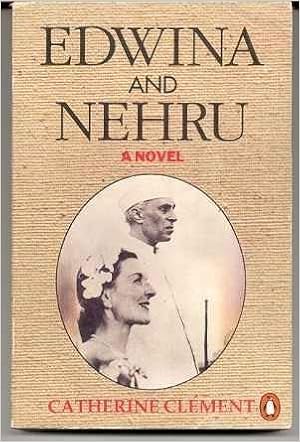
Love affairs always make interesting stories. And if it involves celebrities, more the merrier. This tell-tale saga involves the then prime minister designate of India and the stunningly beautiful wife of the viceroy of India Lady Edwina Mountbatten of Burma. Everybody knew about it and all accepted it. As if it was the done thing. Well known authoress Catherine Clement has penned down this historical liaison as a novel. She used a lot of discretion and didn't let it be a salacious book . In fact it is highly platonic with no juicy details weaved it. At places it even reads like a history of the turbulent times when was about to get freedom and the country was on the verge of getting partitioned.

This 441-page Penguin publication delves more on the role played by Nehru and Edwina along with the Viceroy and the last Governor General Earl Mountbatten in the transfer of power and the consequent creation of Pakistan resulting into a holocaust which can be compared with the Jewish holocaust in Germany and the rest of Europe. Both were communal.
The husband knew the intimacy between his wife and his friend and comrade-inarm Jawahar. But he had no control on the roaring affair. In fact the facts betray a silent connivance. British representative of of His Majesty knew that this relationship was making his job easier. Why only him, all the major players including the Indian lady players like Sarojini Naidu, Raj Kumari Amrit Kaur and even Nehru's daughter Indira were in the know of the scandalous trysts between the high profile actors of the drama being enacted on the national stage in full view of the all and sundry.
Clement had a choice to pep up her novel with juicy details but she confined to roses and small snippets that were exchanged. She brought the two lovers close enough but didn't let her imagination cross the limits. She says in her preface that much is based on historical documents but many scenes have been created by imagination.

There is only one parallel that comes to mind like this The pre-historical roving bonding between Julius Caeser and Cleopatra. That was an earth shaking event between Rome and Greece. It shook both the empires and even forced William Shakespeare to write an immortal play. Nehru-Edwina affair didn't end in a tragedy in fact it was a sweet-bitter ending as it was destined to end sooner than later along with Mountbatten's departure from India. Edwina had a knack of catching men off guards and Nehru had a soft corner for beautiful women. His secretary betrayed the trust acquired by him through his proximity in the PM's house and wrote unprintable details of the goings on in the powerhouse called pm's residence. Khushwant Singh lambasted him for his disgraceful act.
But Clement kept the novel a mushy affair titillating the imagination of the reader.

Monday, 18 January 2016

Gandhi's truth was subjective and selective


Mahatma Gandhi's autobiography ' My Experiments with Truth' is unique in more ways than one. It was originally written in his mother tongue Gujarati, an honest narration of events that shaped his life and influenced successive generations till date. But the events chosen by him and not only subjective but even selective. He wrote it in 1920s after settling down in India and its affairs on his decade and a half sojourn in South Africa. He successfully replicated what her learnt in South Africa. There are few such examples of a London-trained Asian barrister landing in the white dominated black continent and accomplishing an extraordinary feat against racial discrimination.

South Africa was inhabited by three kinds of communities. The Dutch colonizers called Afrikaans, the original blacks and the Indian migrants largely from Gujarat. Gandhi had been invited by a Gujarati businessmen for legal aid. Gandhi understood the problem faced by Gujarati businessmen but willfully ignored the discrimination faced  by the local blacks. It was Gandhi's first selective choice. He became a mute witness to the unfair treatment meted out to the blacks. His argument was that he had come for Indians and shouldn't interfere in the black affairs. It was his subjective choice but didn't fit into his pronounced experiments with truth.

On his return, to India after 16 years Gandhi toured the whole of India at the advice of his political guru Gopal Krishan Gokhale because he was a stranger to Indian domination by the British. However, he had seen the similar discrimination in South Africa, he didn't take it long to understand and chalk out his strategy. He chose for non-cooperation with the British but in a non-violent manner. He didn't endorse the militant agitation against the British. It was his subjective and selective decision. The first crisis when some militant burnt some railways compartments at Chori Chaura in Uttar Pradesh. Gandhi immediately called off his campaign. It demoralized the freedom fighters.

 It divided the country in the soft and hard liners. It continued till India got Independence.
The acid test for Gandhi came when Bhagat Singh shot down a British armed officer and chose gallows. The country was highly agitated and people expected Gandhi to intervene. Gandhi did meet the then viceroy but didn't ask for a lenient view on Bhagat Singh. It again divided the country emotionally and strategically. It is highly debatable that even non-violent non-cooperation is a form of violence or not. It forced the British to use force, put leaders behind the bar and created tension. But Gandhi stuck to his subjective and selective choices.
Lastly, when it was clear that India would be partitioned because of the diffident Jinnah and Hindus and Muslims will migrate from both sides, Gandhi kept on appeasing Muslims led by Jinnah but didn't for see that a holocaust was in the offing which resulted in the genocide of five million people. That was the nail in his coffin an he paid it through his life. His last subjective and selective decision.


Saturday, 16 January 2016

Did Mahabharat society ever exist in India?


Mahabharat is an astonishing epic. Its central character Draupadi was made the wife of five Pandav brothers by her mother-in-law Kunti who herself bore three sons with the help of angels. She even dumped an out of the wedlock son Karan in a river soon after his birth, who became an important players in the forthcoming scheme of things.

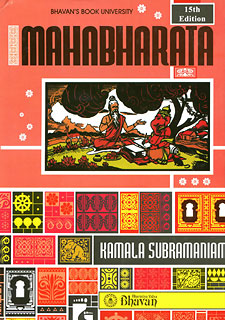
It is said, whatever is there in the world exists in Mahabharat. And what is not there in Mahabharat it doesn't exist. Some people don't keep Mahabharat in their household because the superstition is that brings problems in the family. In fact, the value system displayed in this great work don't gel with a common msn's perception. Some fear that it might give wrong ideas to the readers. But these superstitions are going away and it continues to be a bestseller. It is copywright free. Hence there are umpteen number of editions. I have chosen Bhartiya Vidya Bhawan's edition edited by Kamala Subramaniam Bhawan's founder K. M. Munshi says in his introduction that Mahabharat is a romance telling a tale heroic men and women and of some who were divine. The fulcrum of Mahabharat is Kishan who narrated the message of Gita on the battlefield of Kurukshetra.

Mahabharat is also a euphemism of war. The mother of all wars. It brought an end to the last era and a new era  Kaliyug dawned after it. It is a complete literature in itself, containing a debatable code of life, a philosophy of social and ethical relations and speculative thought on human problems that is hard to rival but above all, it has for its core with Gita.

Mahabharat is an absorbing and engrossing reading and shouldn't be read critically. It is not necessary to draw conclusions but it should be taken as it exists. It has some fairy characters like Ghatokach and valiant young heroes like Abhimanyu. In fact it is difficult to imagine how such characters were carved out. They remain with. B.R. Chopra did a fascinating job in his mega TV serial which competed with its cousin epic Ramayan made by Ramanand Sagar. Unlike Ramayan, it is not a book of faith but a piece of creativity and imagination.
The biggest debate generated by Mahabharat was can a wife be pawned in a game of dice? Is she a property of one husband?

Mahabharat story has a continuous presence of the patriarch Bhisma who emotionally attached to Pandavs but bound to the throne of Dhritarasth through his vow.

In short its a story of rivalry between warring cousins for power.
please leave your comments below.

The Gandhi who is lost in history.


In 1995 ,while travelling through Trinidad and Tobago, a journalist of Indian origin, Paras Ramotar asked me how many more Gandhis were still there in India. His family had migrated from Bihar a couple of generations ago as sugar-cane labour. He was confused about Mahatma Gandhi, Indira Gandhi, Rajiv Gandhi et al(and all). 

I couldn't resist the repartee, India is a dynastic country and the present rulers are Gandhis I am sure during this conversation on Gandhis, I didn't have Feroze Gandhi on my mind.
The other days I spotted a book in the IIC library Feroze Gandhi, Life and leadership. A Mittal Publication written by Saud Akhtar The book gives a clinical account of who Feroze Gandhi and what all he did as an MP and as the head of National Herald. Unfortunately, Herald is now a part of history and a subject of political battle between Gandhis and their detractors like Subramaniam Swamy.

Its a badly written book, full of information but ill structured. It is dishonest in not highlighting the strained relationship between the spouses and Indira's long spells of absence from his house and opting to stay with her father. The book also doesnt mention about the various grapevines which were in circulation about Feroz's liaison with other women. The same had caused a tremendous discomfort to Indira and Nehru. However it was a well known fact in the corridors of parliament. 

Feroze was a product of Indian freedom struggle. He came in contact of young Indira and fell head over heels for her. Wooed her and much against the wishes of her father Nehru married him. But this book hides more than it reveals .e.g, Mahatma Gandhi played a decisive role in clinching Nehru's consent for it. The father had advised the daughter why didn't she look for some other alternatives. Indira's retort was "Why should I consider others , when I had made up my mind!"

In retrospect, it is difficult to say how far Indira reconciled to her decision as things moved. When she married Feroze, her family was in and out of jail for participating in the freedom struggle against the British Raj. Feroze was also an active soldier in this war. At the same time he was taking full care of her family, in particular her mother Kamla who had an indifferent health and spent considerable time in Bhowali sanitorium.

After Independence, Feroze contested and became a Lok Sabha member from Rae Barielly, a constituency which continues to be identified with Gandhis till date besides Amethi. As a young parliamentarian, his performance, was extraordinary. He worked hard to expose the corrupt practices of Indian public sector like ONGC, Oriental Insurance Company, Dalmias and the widely debated Mundra Scandal. It led to the resignation of the then finance minister T. T. K. Krishnamachari in the Nehru government. It was shocking to see, how a treasury member and on top of that the son-in-law of Nehru was exposing the misdeeds of his government. Though on the face of it, Nehru praised his efforts but he was visibly embarrassed that how could such scandals take place right under his nose.

Indira  had not entered politics and was looking after her two sons Rajiv and Sanjay. She used to spend a lot of time with her father in his house on York Road. It was a matter of unease for Feroze but he couldn't stop this. With the  passage of time, it became a subject of popular grapevine that all was not well in the marriage of Indira and Feroze. There were also wagging tails about Feroze's association with other women. All these stories were carried to the household of Nehru. The couple was feeling the strain of tension and discord.

Kamleshwar, the noted Hindi literateur (the one who writes literature) , wrote a story "Kali Aandhi" on which a popular film directed by Gulzar, "Andhi" was made. The celebrated Bengali actress Suchitra Sen played the role of Indira's character to the hilt. The film was a box office success. Finally, Feroze couldn't bear this turmoil and he died young in 1960 at the age of 48.
It is not surprising that Indira and her sons didn't flaunt the legacy of Feroze. In fact, his name was rarely mentioned. His anniversaries were never observed. No institution named after him. Now Maneka who is at odds with her sister-in-law Sonia has named her son Varun as Feroze Varuin Gandhi.

It is intriguing that why Nehru did not consider to make Feroze a minister in his cabinet or a senior position in the party despite his outstanding performance as a parliamentarian and an journalist.

Watch the movie Andhi in Youtube : https://youtu.be/wBYMGrThxkI

Please comment.

Friday, 15 January 2016

Why Hanuman is most popular.

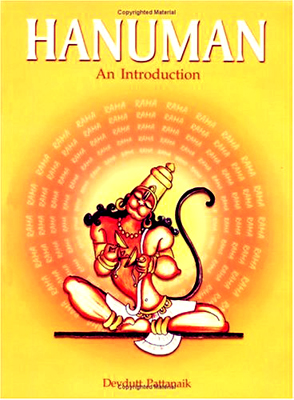
Hanuman is the most popular icon of Hindu faith. Most of the localities in the Hindi belt of India has a Hanuman temple. People cutting across all caste lines people of all cults like Vaishnavs, Shavites believe in him. They keep fast on Tuesday which is considered to be Hanuman day. The renowned medical practitioner-turned Hindu mythology scholar Devdutt Patnaik has done a coffee table book on Hanuman .

This beautifully designed book was  published by Vakils of Bombay in 2001. This 140-odd page is divided in 14 chapters and it introduces Hanuman through his heritage, life story focussing his association with Rama and his heroic deals in finding Sita after she was abducted by Ravana and his one-man ( pr monkey campahign carried out in Lanka).
Hanuman is no history. He is a legendry literary character carved out in Ramayan first by Valmiki but converted into a household deity by Tulsi Das in medieval period. He is as fictional as other Hindu gods like Rama and Krishna. Millions of people believe that they existed much before the Christian era began but there are no historical evidence to support that. Rama's story became so popular that it was modified and recreated in most of the Indian languages and even traveled up to South East Asia. 

Sahmat of Safdar Hashmi fame even organised an exhibition on Rama after the Ram Janam Bhoomi movement leading to Babri Masjid demolition that in some stories Rama and Sita have been depicted as siblings. However, the noted Bollywood filmmaker Ramanand Sagar made millions by producing the Ramayan TV serial which stopped life across India when it was aired every Sunday for more than a year. B.R.Chopra also created a similar history by producing Mahabharat which is more colourful and eventful because of its intriguing plot.
Coming back to Hanuman, what is the secret of Hanuman's popularity. According to Patnaik, Hanuman represents all noble values of a human character, though he was an animal. His devotion and dedication in Rama's life during his banishment of 14 years in exile and his cultural war launched against the Dravidian king Ravana presumed as a Dravidian.

 Hanuman is portrayed as an epitome of character, strength, intelligence, wisdom and intellect. Hanuman caught the fancy of Latin American writers who described him as a monkey god to understand Hindu mythology and philosophy.
There is another myth around Hanuman that he is a liberal god who fulfills all wishes of his devotees.  There is no yardstick to measure that but the widespread acceptance and following of him continues to multiply. Hanuman is fun loving and a frolic character. He is not as sober as Ram and not as cavalier as Krishna is supposed to be. He is a trouble shooter and a celibate on top of that. He didn't marry and no woman could dare to enter his life. But there is a legend that once while having a dip in the sea after burning Lanka, Hanuman's seed fell into the body of a giant fish that had tried to eat him and a son was born. He was named Makardhwaj . Hanuman didn't own him first but when he insisted, he asked him to help in fighting and defeating Ravana's brother Ahiravan . When he did that Makardhwaj was accepted by Hanuman as his son.

You can also follow me on Twitter: www.twitter.com/profomgupta 

Monday, 11 January 2016

Even history doesn't have all answers.


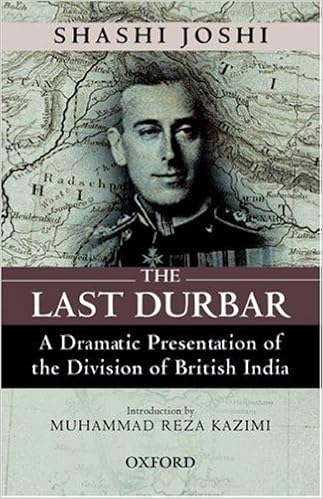
Numerous histories have been written about the tumultuous developments leading to the Independence and partition of India. They were prosaic description of events in a chronological order. Interestingly Oxford Pakistan has brought out a dramatic presentation of the division of British India by a  Delhi-based historian Shashi Joshi. Pakistani scholar Muhammad Reza Kazimi begins his preface: "Much history writing has emerged from the Partition of the Indian subcontinent. And yet the whys and wherefores of the decisions taken during the run-up from March 1947 by the leaders involved continue to remain unclear and intriguing." And he ends: Nevertheless the drama retains its interest mainly because of the impartiality of the author. She doesn't hesitate to depict  Sardar Patel as a communalist, and more remarkably, she gives the correct  sequence and interpretation of the Kashmir and Junagarh crisis. She has reached out enough.
It portrays the top leadership of Congress-- Gandhi, Nehru, Patel, Krishna Menon, Ambedkar and Rajendra  Prasad as a pawn on the chess board of history. Gandhi tried his level best to avoid the partition. He even suggested that let Jinnah be the prime minister but nothing worked. Finally, he put is life on the altar of communalism on the issue of Rs 55 crore aid to Pakistan and laid down his life to the bullets of Nathuram Godse.
This book doesn't answer why the partition couldn't be avoided and why the holocaust be not avoided. A straight narration of history writing can't describe the multiplicity of fast changing scenario. In this book Mountbatten has been shown as a friend of India and he tried to avoid the division despite the popular perception that the British wanted it. The manner in which the leaders turn into actors and appear on the stage of history, is a fascinating way to showcase how dramatic the situation was. No leader was in control. not even Nehru. Jinnah has been portrayed as the villain de piece. He was determined to create a Muslim nation and in his wily ways, he got what he wanted. Nobody could stop.
Pakistan was destined to a failed state because of its fallacious premise. India still has around 18% Muslim population and a large number of Hindus still exist in Pakistan, especially in Sind. Despite the creation of Pakistan, the relations between two neighbours are far from normal. It is a travesty of history that division of a country is no solution.
Except, Mountbatten, no British officer was disturbed that such a bog tragedy was being played across the border. They had no love lost for India. They were in a tearing hurry to leave India. Winston Churchill had even predicted that these natives won't be able to handle India. We did but after paying a heavy price. The wounds are still not fully healed. There is a colony in Lajpat Nagar, Delhi where the widows of partition and their children are still in the shadow of lingering memories of the partition. I met a middle-aged aunt of a friend of mine who had visited them from Pakistan after many decades. Her fleeing family in 1947 had left her behind in a hurry. She had married her Muslim landlord after converting to Islam. There are many such stories in this part of Punjab.
Historians haven't been able to figure out why the Indians were in such a great hurry and why the British couldn't have overseen the transfer of population in a phased manner. But even history doesn't have all the answers.

Revisiting Bhagwat Gita


Most of us have heard about Gita. It is originally in Sanskrit but has been translated into many Indian and foreign languages. Some call it spiritual, others as philosophical. It is both and even more. Depending on the spirit of the reader. A recent lyrical translation in Hindi and English called 'Uttishtha Bharat'  ( Rise ad awake Bharat)by Neelam Varma caught my attention and I found it unputdownable.  It is borrowed from Vivekanand's clarion call Uttishtha, jagrata, Nibodhata ( Rise, awake and acquired knowledge). This is the gist of Gita.
Gita is considered to be the most respected epic of India. Verma has done a remarkable job more from her heart than the mind. Though Gita is a more a subject of intellect than  mushy sentimentality. In fact people worship it more than reading it. it is identified the world over, as the icon of India.
Moughal prince Dara Shikoh and even German Indologist Max Muller analysed it. It has been called a celestial song. I remember my parents reciting it loud. With due apologies, I don't know how much they understood it. But it was a matter of faith. And there was no question of agnosticism.Its best translation in English is credited to Edwin Arnold. The translation was titled 'Light of Asia.' Gandhi to Tilak many swore by it. Tilak even wrote a treatise 'Gita Rahasya' (Secret of Geeta).
Who wrote it? When was it written? It is believed that Lord Krishna narrated it on the battlefield of Krishna while exhorting his friend  Arjun to pick up arms and fight against his cousins, the Kauravs led by Duroyadhan in the great war of Mahabharat. That way Gita is a part of the large Mahabharat canvas. Ved Vyas is accepted as the author of both. There is no historical evidence of Ved Vyas like Balmiki. Some say many people contributed in the writing of Mahabharat epic. And  Ved Vyas was a title of a scholarly chair.
But that is a part of Indian mythology. Ram and Krishan are the most venerable divine figures. Unlike Jesus Christ and Prophet Mohammad, Ram and Krishan never existed accepted in the faith of Hindus. And there are millions who don't want to contest  it. There are atheists who don't accept their existence and call it literary heroes.
Mahabharat along with Ramayan are accepted as the holy books of Hindus. However Gita has earned its reputation as a standalone collector's item. It has as many editions as any designer or publisher could think of. From a miniscule matchbox size to coffee table book. Gita Press of Gorakhpur in eastern Uttar Pradesh acquired a holy image by publishing Hindu mythology from Hanuman Chalisa to Ram Charitmanas. The singular credit to it goes to its founder-publisher Hanuman Prasad Poddar.
It has 18 chapters containing 700 verses called shalokas. it talks of Karamyog, Bhaktiyog and Gyan yog. Yog means addition. But its main thrust is on action.
Let's have a look at its most-quoted couplet
Karmanyevadhikaraste ma fkeshu kadachanI:I
Makarmphalhetubhoorma tasvakarmani:II
Verma  has translated it as:
You have the right to choose your action.,
But the result is not in your domain,
As you renounce the expectation, Never fall to inaction
Never from your duty refrain.
Every man is expected to act in his life as a human being, as a member of a family, as a citizen. Gita says no one should avoid action e.g., if a father feels in his middle age why should he raise his children. It is not his responsibility. Or in a job, if someone says if others are not working, why should he work. Then he is wrong. All of us are destined to perform our duty as soon as we  grow up. It has been explained by Krishn to Arjun who was developing cold feet in attacking his own relations like his grandfather Bheesham, his guru  Dronacharya and his cousins.
Generally people refrain from doing what they are supposed to do in their life. A school student doesn't want to study, an adolescent wants to experiment with the vagaries of life as he is exposed to the wider world, young ladies and men run away from home because their parents don't approve of their relationship. Now here comes the acid test of Gita. As a human being one has a duty towards oneself, the society, the family and the world at large. Generally he gets confused in making a choice. Gita says, one should act for good cause, correct values and people and what is in the larger interest of humanity. One shouldn't take decision just for petty selfish interests. It is a catch 22 situation. Arjun faced this dilemma and thre his arms. Then Arjun gave him the classical sermon on atman, the soul. I will quote the original verse and the Verma's translation:
Nainamchhindanti shastrani nanam dahti pavaka: I
Nainam chainam kledayanyapo na shoshyati maruta:II
The Self within us is Eternal and Pure,
Be sure, be sure, be sure.
Neither can the weapon slash It,
Nor can the fire burn It
Water wets It not.
Wind dries It not. The Self within us is Eternal and Pure
Now what is this Self. it is a euphemism of the soul. This single word soul has stirred the imagination of a large number of Indian and foreign thinkers and writers. Some call it conscience as well. Whenever there is a crisis in life, we think and wonder what to do. Should I marry or not? Should I tell a lie for a good cause? Should i sack this person or give him another chance? Shall I leave my sick parents and go abroad for higher studies or a job or not? Gita has all the answers. You must take a decision. You can't evade that. Weight pros and cons. See who is right, who is wrong. Don't bother about the relationships, momentary pleasure or gain. Take a wider perspective and decide.

Saturday, 9 January 2016

Why I assassinated Mahatma Gandhi.

I spotted a highly debatable book "Why I assassinated Mahatma Gandhi". Thanks to the freedom of expression enshrined in our constitution this explosive explanatory justification given by none else but the killer Nathu Ram Godse himself, is readily available off the shelf in book stores. The MP shared that he got a culture shock while reading this 100-odd page statement delivered in a court of law. Even the judge G.D.Khosla commented that it was difficult to remain indifferent by the die-hard ideologue Godse. No one can agree to the killing of your ideological opponent still the law allows an accused to express his version.  It is ironical to note that Gandhi lived by his Hindu faith and a champion of Hindu-Muslim unity and he opposed the division of his country but this very belief became the cause of Godse's provocation.  A book is successful if forces to reader to revise his perspective on a given situation. This book does that. One doesn't become a Godse-sympathiser but the clash of two could faiths could be do disastrous is a painful thought.

This book is a reproduction of the five day long defense statement made by the assassin Hindu Ideologue Nathuram Godse who infuriated because of the pro-Muslim tilt of Gandhi on the eve of the Partition and the consequent creation of Pakistan. He hit the bulls eye when Gandhi declared a fast unto death for giving rupees 55 crore aid to Pakistan. Godse said he resolved that it was the time to remove Gandhi from the scene and he did it with a firm determination. He went into minute details of the political developments leading to the murder. He executed it in a cold blooded manner. The book is a sordid saga of the churning of mind of a determined killer. Many international figures like John F. Kennedy, Abraham Lincoln and Anwar Sadat of Egypt were killed because of the political considerations but no killer chose to pen down his thought process.

It was a culture shock for to see this book displayed on a book stall in a public square. I couldn't resist buying a copy and read it in one go. I got a rude shock while imbibing the mindset of a killer. 

I strongly feel that this book must be read by all the people interested in turbulant times in 1940s when the British decide to leave India and negotiated a transfer of power which was destined to consummate in a blood bath killing more than 5 million people. This book should be read for the roles played by the great freedom fighters of India like Gandhi, Nehru, Patel and Azad. Of course Jinnah was also a lead player but he swung towards the division of the country. Gandhi tried his best to stop the partition but he could neither save this nor his life.

Between the Lines, Between the Covers.

Ever since I started reviewing an English book every week by an eminent author for Amar Ujyala two years ago everything changed in my life. I had the choice to pick up any book by any author and deal with it in its content, language and style for the benefit of two  million subscribers of this prominent daily. My day was made when a lady called from a nondescript town of Iawah, Uttar Pradesh and told to my utter shock that she eagerly awaits for my weekly column in Amar Ujyala. She said she has kept the clippings of all my reviews. There could not have been a bigger reward for a distant reviewer. I am sure that there are many such silent readers I am not aware of.

A book is an ultimate expression of  creativity, imagination and experience of the author and if it is a work of fiction then its a new world created with whom one does not know how many people get identified. From Penguin to Hatchett, Harper Collins to Oxford, I started getting the latest volumes by courier. The author friends would phone me to include their book in the next column. I suddenly felt that it was a satisfying moment more than anything else in last four decades of my media career.

A news story lasts till you write your next story but a book review stays as long as the book lasts and some books last forever. I am free to pickup and comment on any book of my choice. In this proposed blog called www.profomgupta.blogspot.com I will be reviewing a book everyday. You are lucky that India publishes more than seventy thousands books every year, though 99 percent are not worth a second look.  However one has a choice to pick up any book from any part of the world.

My format will be to pickup that  book which has something new to add to the readers perspective ad giving him another point of view or some new knowledge or information  needless to say no propaganda,  no political jargon or the personal hyperbole of a megalomaniac.  My approach will be interactive so that any reader of the review becomes tempted to disagree with me. Because diversity of opinions is the backbone of any civil society.

Needless to say that my leanings from the experiences I have undergone will unwittingly play an important role in the treatment of my reviews. I will not confine just to concentrate on the coordinates of  a book but go beyond it by dealing with the spirit of the content and  the manner which the author has gone beyond the accepted notions about the subject concerned. There is an age old tradition that every book has a preface in the beginning and a epilogue in the end. It is done to state the fact that life does not come to an end with a book. Many questions are always left unanswered and I will try to give the answers if I have. No author or a book will be a holy cow for me.

Om Gupta.